
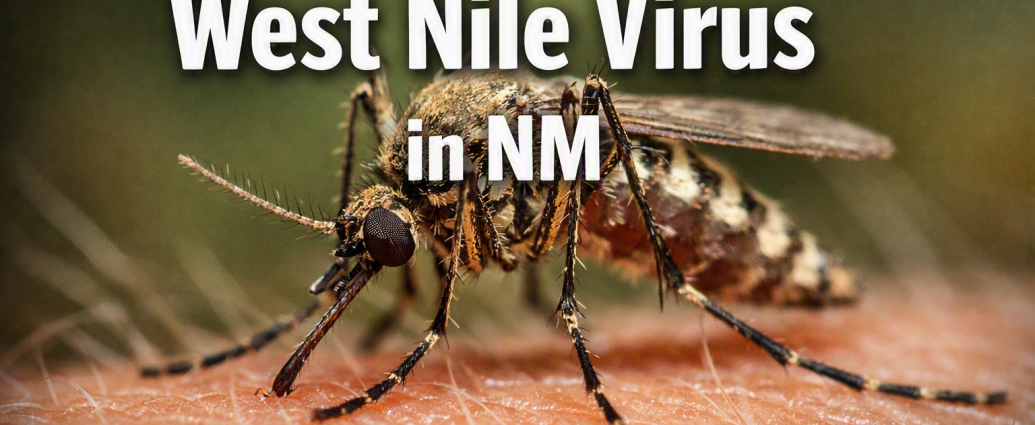

SANTA FE — Two New Mexicans have tested positive for West Nile virus, prompting state health officials to expand mosquito surveillance and urge residents to take precautions as summer mosquito activity increases across the state.
The New Mexico Department of Health confirmed infections in a Bernalillo County woman in her 70s, who is hospitalized, and an Otero County man in his 30s, who is recovering at home. Both cases were identified through routine seasonal testing.
Health officials say West Nile virus is spread through the bite of infected mosquitoes and can cause illness in people, horses, and birds. The department has increased mosquito monitoring in partnership with New Mexico State University’s Molecular Vector Biology Lab, local environmental health offices, and several southern New Mexico municipalities.
Mosquito activity has risen following early monsoon rains, especially in Doña Ana, Luna, Grant, and Hidalgo counties, where standing water from irrigation and storm runoff creates ideal breeding conditions. Positive mosquito pools have already been detected this season in multiple southern counties.
Residents are encouraged to use EPA-approved insect repellent, wear long sleeves and pants at dawn and dusk, remove standing water around homes, keep rain barrels screened, and ensure window and door screens fit tightly.
Symptoms of West Nile virus may include fever, headache, body aches, nausea, and fatigue. Most people experience mild or no symptoms, but about one percent develop severe illness such as neck stiffness, confusion, tremors, seizures, weakness, or paralysis. People age 50 and older, and those with underlying health conditions, face a higher risk of complications.
New Mexico has averaged about 41 reported human cases annually over the past five years. Southern counties typically report a mix of human, horse, and bird infections each summer, with Doña Ana and Luna counties showing the highest activity in recent years.
Health officials urge anyone experiencing symptoms to contact a healthcare provider. More information is available at nmhealth.org or through the Epidemiology and Response Division at 505-827-0006.
John Krehbiel, Bravo Mic Communications News – John@bravomic.com
KMVR Magic 104.9- Playing Today’s Biggest Hits